Flyfishing Forecast
Capt. Rick Grassett’s Sarasota, FL Fly Fishing Forecast for April 2026
This is a great month for snook on shallow flats. Reds and trout will also be more active as the water warms and baitfish become more plentiful. You might find Spanish mackerel, blues and pompano in passes or on deep grass flats. You should also find Spanish mackerel along with false albacore (little tunny), cobia and tripletail, in the coastal gulf this month. Tarpon should also make an appearance in bay or back country areas or along beaches by later in the month.
Tarpon will become more plentiful as resident fish make their way out of rivers and creeks and early arriving migratory fish begin to show along beaches, particularly by the end of the month. Water temperature in the gulf is a key factor with 80 degrees being an optimum temperature. As the water warms towards that, fish will become more plentiful. Resident fish may be rolling on deep grass flats in some of the same places that you find trout, laid up on edges of shallow grass flats or along sand bars. Fly anglers might connect with a black Deceiver, Tarpon bunny or EP fly fished on an 11 or 12-weight fly rod with a floating or clear sink tip fly line depending on depth. I always have tarpon tackle, rigged and ready, on the boat this time of year.
Snook should be staging on flats, around sand and oyster bars, on points of islands and around docks and bridges close to passes in the ICW. Fish the edges of bars and potholes when the tide is low and mangrove shorelines or points of islands when the tide is high. I like wide profile flies, such as Lefty’s Deceiver, my Grassett Flats Bunny or EP flies, for snook on the flats.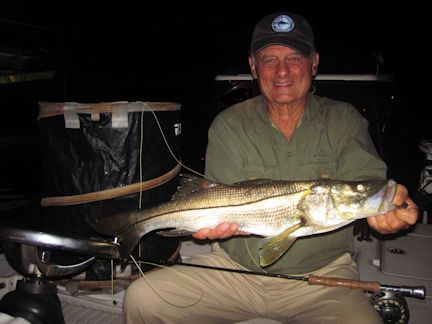
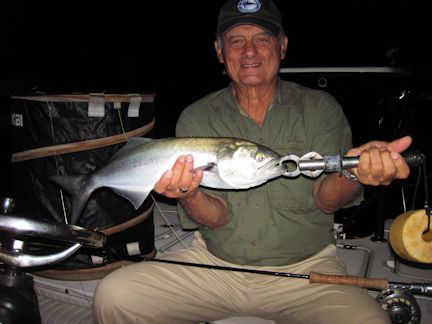
You’ll also find snook around docks and bridges in the ICW. Night snook fishing should be productive with small white flies, like my Grassett Snook Minnow fly, shrimp patterns or Shrimp Gurglers. Fish peak tidal flows for the best action.
Reds will spend more time feeding on shallow flats due to more plentiful bait. Look for them in potholes, the edges of bars and around docks when the tide is low. You should find them higher on flats over shallow grass or around mangrove shorelines when the tide is high. My Grassett Flats Minnow is my “go to” fly for reds. It fishes well in shallow water and its bend back design makes it very weedless. You may also find big trout in skinny water in many of the same places that you find reds. The same flies and techniques used to find and catch reds will also work for big trout.
Trout should be plentiful on deep grass flats. I like to drift and cast ahead of my drift. Look for trout on deep grass flats with a good tidal flow and a mixture of grass and sand. Fly anglers should score with weighted flies on sink tip fly lines. Trout regulations have changed in southwest Florida to a 3 fish per person, bag limit and a 6 fish boat limit. Trout must be from 15”-19” with one allowed per vessel over 19”. In my opinion it’s important to protect larger trout, which are usually female breeders.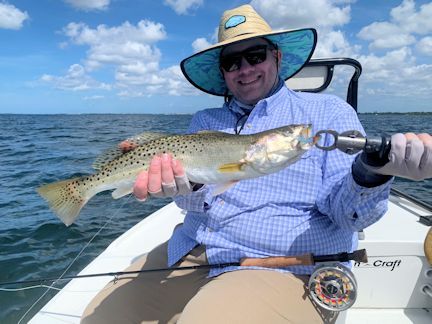
You might also find blues, Spanish mackerel, pompano or flounder mixed with trout on deep grass flats. The same flies and techniques that you use to find trout on deep grass will work for these species, too. You’ll need to tip your leader with wire or heavy fluorocarbon when blues and mackerel are around. I prefer heavy fluorocarbon and flies tied on long shank hooks, since that usually won’t affect the trout bite. I tie Clousers with Ultra Hair on long shank hooks so that they are durable and will hold up to toothy and rough mouth fish. Blues and mackerel usually don’t feed on the surface in the bay like they do in the open gulf, but you may see bait showering or boils indicating fast moving fish, feeding just below the surface. Pompano may “skip” when you run or drift past them giving their location away. When that happens, circle back upwind and drift the area. Flounder are often found in potholes, on the edges of bars or on mud bottom.
There should be good action in the coastal gulf this month with Spanish mackerel, false albacore (little tunny), cobia and tripletail. Look for Spanish mackerel or albies feeding on the surface. You might find tripletail or cobia around crab trap floats. Your tarpon fly tackle can do double duty for cobia and an 8 or 9-weight fly rod will cover everything else. Artificial reefs or natural areas of hard bottom may hold any of these species. When fishing over bottom structure you will need to get your fly down in the water column to the level where fish are located, so in addition to a floating line you may need a sinking line to cover more of the water column. Full regulations and details for all species can be viewed at https://myfwc.com/ .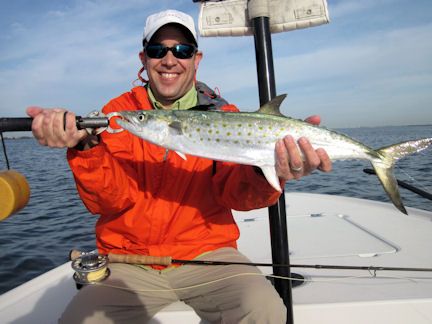
April is one of my favorite months. There should be good action in the bay on both shallow and deep grass flats, in the coastal gulf for mackerel, albies, cobia and tripletail and with tarpon by the end of the month. Our natural resources are under constant pressure from red tides fueled by industrial, agricultural and residential runoff, toxic spills and discharges, freezes, increasing fishing pressure and habitat loss and degradation, please limit your kill, don’t kill your limit!
Tight Lines,
Capt. Rick Grassett
Federation of Fly Fishers (FFI) Certified Fly Casting Instructor (CI)
Private and group fly casting instruction
Instructor for CB’s Saltwater Outfitters Orvis-Endorsed Fly Fishing Schools
Hosted group destination fly fishing trips
www.snookfin-addict.com and www.flyfishingflorida.us
E-mail snookfin@aol.com
(941) 923-7799 (office/land line)
Capt. Rick Grassett’s Sarasota, FL Fly Fishing Forecast for March 2026
There should be good action with reds, trout and snook in skinny water in March as the water warms and baitfish become more plentiful. Look for Spanish mackerel, cobia, tripletail and false albacore (little tunny) in the coastal gulf. Night snook fishing in the ICW should also be a good this month.
This should be a good month for snook fishing at night around lighted docks and bridge fenders in the ICW. Small white flies, like my Grassett Snook Minnow, usually work well at night since glass minnows are the predominate baitfish. Focus on shadow lines where light meets dark and fish strong tides for the best action. Although snook may also be found in rivers, creeks or canals in March, they will also start to move onto shallow flats, particularly on sunny afternoons when it’s warm. I like wider profile flies, like my Grassett Flats Minnow, Deceivers and EP flies, for snook on the flats.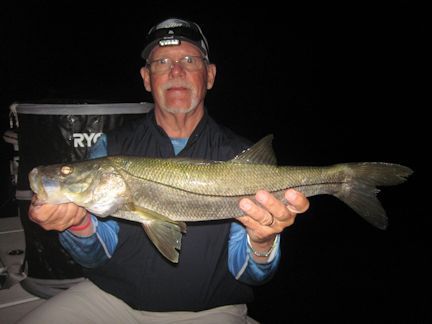
Look for early season tarpon that may start to show in backcountry areas. These are usually adult resident fish that are making their way out of rivers and creeks. They may be “laid up” or rolling on deep grass flats, on edges of shallow flats or along bars when it is calm. An accurate cast may result in an explosive strike! Look for them in areas of lower Tampa Bay or in Gasparilla Sound.
Reds should be more active as the water warms and baitfish become more plentiful. Higher tides, as we head into spring, will allow them to spend more time feeding in shallow water. Look for them over shallow grass, along mangrove shorelines and around oyster bars when the tide is high. You should find them in potholes and along sand bars when the tide is low. Fly anglers should score with my Grassett Flats Minnow fly, fished on a 12’ or longer leader. When using a long leader be sure you are able turn it over, otherwise you’ll need to shorten it until you can. The butt section should be at least 50% of the total length of the leader and stiff enough to transfer energy from your fly line to the leader.
You may find big trout in skinny water in many of the same places that you find reds. Blind cast seams where grass meets sand or focus on light colored bottom, in potholes on top of sand bars, where you may be able to sight fish them. These big fish are important to the health of our fishery since they are usually females that are often filled with roe in March. Full regulations and details for all species can be viewed at https://myfwc.com/ .
You should also find trout plentiful on deep grass flats along with Spanish mackerel, blues, and pompano. I like to make a series of drifts, casting ahead of the drift with an Ultra Hair Clouser fly tied on a long shank hook and fished on a clear intermediate sink tip fly line to locate fish. Also look for birds, bait showering out of the water or boils on the surface that will indicate fish feeding below. When mackerel and blues are around, you may need to add 6” of 40# to 60# fluorocarbon or wire to your leader. Fly poppers also work well when blues and mackerel are around and may help locate them by attracting them from further away. Pompano may skip on the surface when you drift or run past them, giving their location away. Fish deep grass flats with a mixture of grass and sand and a strong tidal flow for the best action.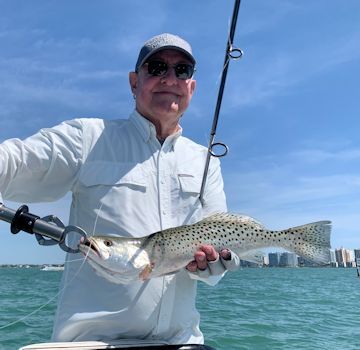
You may also find Spanish mackerel, false albacore (little tunny), cobia or tripletail in the coastal gulf this month. Look for diving or hovering terns to find Spanish mackerel or false albacore feeding on the surface. Small white flies, like my Grassett Snook Minnow or Ultra Hair Clousers fished on an intermediate sink tip fly line, will work well for them.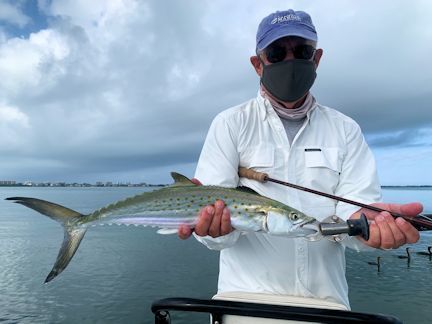

Run crab trap lines at various depths to find tripletail or cobia around crab trap floats. Fly anglers should score on tripletail with lightly weighted flies with weed guards. I like my Grassett Flats Minnow or a shrimp pattern for tripletail. Cobia may also be swimming on the surface as they migrate from south to north following warmer water and baitfish. Large, wide profile flies, like Deceivers or EP flies would be good fly choices for cobia. In the absence of any fish on the surface, check out one of the many artificial reefs or natural hard bottom areas that may hold baitfish and predators. Drift over structure and cast weighted flies on fast sinking fly lines to get deeper in the water column to catch them.
Conditions are usually good during March and fishing heats up. Flats and night snook fishing are usually good options this month. I like to check the coastal gulf when conditions are good, since you could find something really good happening there. Our natural resources are under constant pressure from red tides fueled by industrial, agricultural and residential runoff, toxic spills, discharges, freezes, increasing fishing pressure and habitat loss and degradation, please limit your kill, don’t kill your limit!
Tight Lines,
Capt. Rick Grassett
Fly Fishing International (FFI) Certified Fly Casting Instructor (CI)
Private Fly Casting Instruction
Instructor for CB’s Saltwater Outfitters Orvis-Endorsed Fly Fishing Schools
Hosted Destination Fly Fishing Trips
www.flyfishingflorida.us and www.snookfin-addict.com
E-mail snookfin@aol.com
(941) 923-7799 (Land Line/no text)
Capt. Rick Grassett’s Sarasota, FL Fly Fishing Forecast for February 2026
Trout and redfish should be good shallow water options this month. You may also find trout along with blues, Spanish mackerel, pompano and flounder on deep grass flats. Look for sheepshead, flounder, reds and more around docks. Catch and release night snook fishing around lighted docks in the ICW may be a good option if it’s not too cold.
Since snook are temperature sensitive, I won’t target them following strong fronts when water temperatures dip below 60 degrees. However, I have had some great night trips catching and releasing snook on flies in the ICW at night this time of year. Since larger baitfish aren’t that plentiful this time of year, snook will gorge themselves on glass minnows and shrimp. Small white flies, like my Grassett Snook Minnow, Gurglers or shrimp patterns will all work well.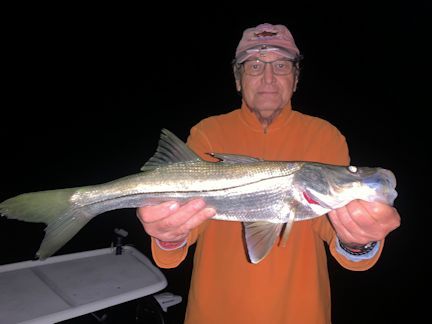
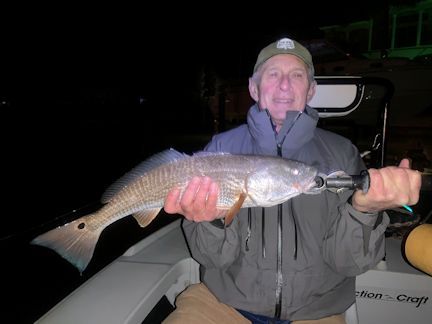
You may also find snook in rivers, creeks or canals this month. Fishing may be good in these areas on a blustery day when it isn’t fit to fish anywhere else. I like wider profile flies in these areas due to the baitfish that may be found there. Fly anglers should score with baitfish patterns, such as Lefty’s Deceiver, EP flies or my Grassett Deep Flats Bunny, fished on a sink tip fly line. Fish the deep spots, usually in bends in the river, for the best action.
You might find reds in potholes, along the edges of bars or tailing on shallow flats when the tide is low. As the tide rises, they will feed higher on shallow flats, particularly on sunny afternoons. Fly anglers should score with lightly weighted flies on floating lines with 10’-12’ leaders. My Grassett Flats Minnow fly is my “go to” fly for fishing skinny water. You may also find big trout in skinny water in the same places you find reds. The same flies and techniques that you use to target reds will work for big trout in those areas.
You’ll also find trout on deep grass flats. I like flats that have a good mix of grass and sand and good tidal flow. Flats that are close to passes are often good choices unless the water is dirty. Following fronts, silted up water will cover deep grass flats close to passes, often affecting fishing in those areas. I like to drift and cast ahead of my drift with weighted flies, like my Grassett Deep Flats Bunny or Ultra Hair Clouser flies, on sink tip fly lines to locate trout. Once you’ve located them you can shorten your drift or anchor on them. Current trout regulations allow a bag limit of 3 fish per person and a 6 fish boat limit with a slot from 15”-19”. One trout above 19” is allowed, however in my opinion it is important to protect these larger fish since they are usually breeders that are important to the health of our trout fishery. Full regulations and details for all species can be viewed at https://myfwc.com/ .
In addition to trout, you may also find blues, Spanish mackerel, flounder or pompano, depending on water temperature and conditions, on deep grass flats. The technique to find them is the same as for trout, although there may be other clues. Pompano may “skip” on the surface when you drift or run past them giving their presence away. When that happens, set up a drift upwind of where you saw a pompano and cast ahead of your drift. Blues and Spanish mackerel may force bait out of the water or feed on the surface. You may need to add heavy fluorocarbon or wire when blues and mackerel are mixed with trout on deep grass flats. I like to use Ultra Hair Clouser flies, tied on long shank hooks leaving a portion of the hook shank exposed as a bite guard, when toothy fish are around.
There may be some action in the coastal gulf by the end of the month with Spanish mackerel and cobia depending on conditions. When the water warms to the high 60’s to low 70’s, these fish will move into our area from the south as they migrate north. Look for Spanish mackerel on the surface or in passes. Cobia may be swimming on the surface, around buoys, channel markers and crab trap floats or over structure. Tripletail may also be an option during warm ups in the coastal gulf.
February can be a tough month to fish. With frequent fronts and cool water, fish aren’t always in an eating mood. If you’re able to pick good tides combined with favorable weather conditions, you should be successful. If you don’t have that luxury, you might do better by sleeping in and fishing later in the day when it’s warmer. Our natural resources are under constant pressure from red tides fueled by industrial, agricultural and residential runoff, toxic spills and discharges, freezes, increasing fishing pressure and habitat loss and degradation, please limit your kill, don’t kill your limit!
Tight Lines,
Capt. Rick Grassett
Fly Fishing International (FFI) Certified Fly Casting Instructor (CI)
Private Fly Casting Instruction
Instructor for CB’s Saltwater Outfitters Orvis-Endorsed Fly Fishing Schools
Hosted Destination Fly Fishing Trips
www.flyfishingflorida.us and www.snookfin-addict.com
E-mail snookfin@aol.com
(941) 923-7799 (Land Line/no text)